Electrical emergency right now?

GUIDE · REPAIRS & CHANGEOVERS · SYDNEY

Hot water electrician Sydney — repairs, off-peak wiring & heat pump changeovers

What element and thermostat repairs actually cost, how off-peak (controlled load) wiring cuts your bill, and when it makes sense to swap an old resistive tank for a heat pump system — with real Sydney pricing and NSW rebate figures.

Same-day repairs

Element, thermostat and controlled-load faults diagnosed and fixed in one visit.

Fixed written quotes

Diagnosed on site — you approve the quote before any parts or labour go in.

24/7 emergency

After-hours hot water failures covered under our 24/7 call-out service.

Rebate paperwork done

NSW ESS heat pump rebate lodged for you — you see the discount off the invoice.

SECTION 01

Element & thermostat repairs — what to expect

Element replacement (most common): $320–$520 fully installed. Includes isolate, drain, new element, refill, purge, thermostat check and CCEW. Element life in Sydney's water is typically 8–12 years depending on tank size and duty cycle.

Thermostat replacement: $260–$380. Symptoms are lukewarm water, cycling on and off too often, or water running scalding hot. Almost always cheaper to replace both element and thermostat together if the unit is 8+ years old.

Tempering valve service or replacement: $160–$340. NSW requires 50°C at the tap for residential — a failed tempering valve is a compliance issue as well as a comfort issue.

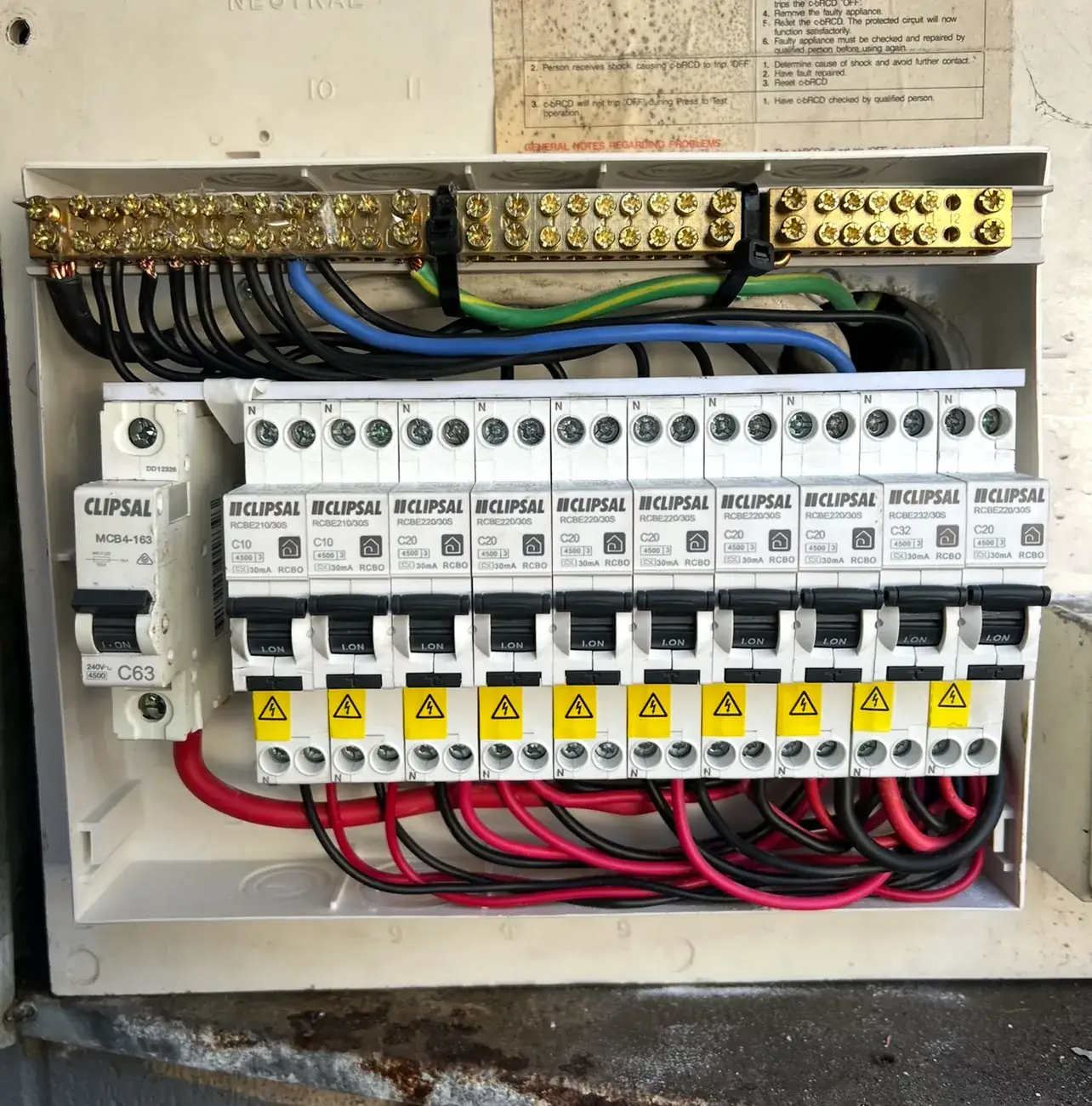
RCD/circuit breaker fault at the switchboard: $180–$320 to diagnose and replace the breaker or RCBO. If the fault trips again after replacement, the element itself is usually leaking to earth and needs changing too.

SECTION 02

Off-peak (controlled load) wiring — the biggest running-cost win

Controlled load 1 (CL1) — power to the hot water is only live overnight (~11pm–7am) at roughly half the general tariff rate. Suits electric storage tanks 250L or bigger where one overnight heat lasts the whole next day.

Controlled load 2 (CL2) — power available in an extended off-peak window (typically 20 hours per day, all except peak evening). Slightly higher tariff than CL1 but the tank tops up during the day if needed.

Cost to convert an existing general-tariff tank to CL1: $480–$780. Includes switchboard rewiring, dedicated controlled-load isolator, RCD compliance, meter reprogramming request lodged with your retailer and CCEW.

Bill impact: for a typical Sydney family (4 people, 315L tank) shifting from general tariff to CL1 saves $380–$720 per year. Payback on the conversion is usually under 18 months.

SECTION 03

Heat pump hot water changeovers — when it stacks up

Heat pump systems use roughly a quarter of the energy of a resistive electric tank for the same hot water output. Sydney climate suits heat pumps well — mild ambient temperatures year-round mean high year-average COP (coefficient of performance).

Full changeover cost after NSW ESS rebates: $3,900–$6,500. Includes heat pump unit (Reclaim, iStore, Rheem Ambiheat, Sanden), electrical isolator, dedicated circuit, plumbing tie-in, old tank removal, and rebate paperwork.

NSW ESS rebate: typically $800–$1,600 depending on the model's energy rating and your postcode zone. We lodge the paperwork and the rebate is applied as a discount off the invoice — you don't chase it separately.

Payback: 2–4 years if you're currently on general tariff, 4–7 years if you're already on CL1 off-peak. After payback you're looking at $250–$400 per year to run hot water for a family of four.

SECTION 04

When to repair vs replace your hot water system

Under 8 years old, element or thermostat fault: repair. Parts are 10–15% of a new tank and the rest of the system has years of life left.

8–12 years old, first major fault: repair, but budget for changeover in the next 2–3 years. Consider going to heat pump on the next failure rather than reactive element swaps.

12+ years old, any fault: changeover. Element replacement on a tank at end of life usually buys you 12–18 months before the tank itself perforates and floods the laundry.

Any tank leaking from the body (not fittings): changeover, no discussion. Element and thermostat repairs cannot fix a rusted tank.

Renovating and moving the tank location: perfect time to switch to a heat pump — you're doing plumbing and electrical anyway.

About to install solar PV: heat pump paired with a solar diverter runs almost free during daylight hours.

FAQs

How much does it cost to replace a hot water element in Sydney?

A standard element and thermostat replacement on an electric storage hot water system is $320–$520 fully installed, including drain-down, refill, test and CCEW. Faulty tempering valves add $160–$240. If the tank itself is leaking (rust perforation) it's a full changeover — not an element repair.

Can you install off-peak (controlled load) wiring?

Yes. We wire hot water to controlled load 1 (overnight) or controlled load 2 (extended off-peak) via the meter, which cuts the running cost of an electric storage system by 40–60 percent versus general tariff. This includes the switchboard changes, meter reprogramming request to the retailer, and CCEW.

Do I need an electrician or a plumber for hot water?

Both, and the right order matters. Anything electrical — element, thermostat, tempering valve wiring, off-peak conversion, isolator, RCD — is electrician work. The tank body, hot and cold plumbing, PTR valve and gas fittings are plumber work. For a full changeover (electric to heat pump, or old tank to new tank) we coordinate directly with a licensed plumber so it's one visit, not two.

How much does a heat pump hot water changeover cost?

Sydney heat pump hot water changeovers land at $3,900–$6,500 fully installed after NSW Energy Savings Scheme rebates. That covers the heat pump unit, electrical isolator, dedicated circuit from the switchboard, plumbing tie-in, removal and disposal of the old tank, and rebate paperwork.

My hot water isn't heating — what's wrong?

Most common: failed element (no hot water at all), failed thermostat (lukewarm or scalding), tripped safety cut-out (usually indicates a bigger fault), or tripped RCD/breaker at the switchboard. We diagnose on site — usually within 20 minutes — and give you a fixed quote before any parts go in.

Do you offer same-day hot water repairs?

Yes — same-day is standard for element and thermostat faults if you call before midday. After hours and weekend call-outs are available under our 24/7 emergency service. Most electric storage repairs are completed in a single visit with parts on the van.

Should I switch from electric storage to heat pump?

For most Sydney homes on general tariff, yes — heat pump uses roughly a quarter of the energy of a resistive electric tank. NSW ESS rebates typically cover $800–$1,600 of the changeover cost. Payback is usually 2–4 years. If you're already on controlled load 1 (overnight off-peak), the running cost gap is smaller — payback stretches to 4–7 years.

Related

24/7 Emergency Response

Real Sydney electricians on stand-by - day, night, weekends and public holidays.

Call Now
24/7 Emergency Response

Fully Licensed & Insured

NSW licensed electrical contractor with full public liability insurance.

Request Help
Fully Licensed & Insured

Upfront, Honest Pricing

Clear recommendations and pricing provided before any repair work proceeds.

Get a Callback
Upfront, Honest Pricing

Lifetime Workmanship Warranty

If our workmanship ever fails, we come back and fix it. Free.

View warranty details
Lifetime Workmanship Warranty

VOLTEX SPECIALIST

25-year RCBO, GPO & switch warranty

Plus 7-year replacement on Voltex internal & external lighting.

Empire Electrical Contractors Sydney team

Our Mission

At Empire Electrical Contractors, we're committed to being Sydney's most trusted emergency electrician - whatever the time, whatever the fault.

Our licensed team is equipped with the knowledge, tools and stocked vans to handle any emergency electrical job - from a tripping safety switch at 3am to a burnt switchboard that needs replacing today.

Call us 24/7 to speak with a real Sydney electrician. Clear recommendations and pricing provided before any repair work proceeds.