Electrical emergency right now?

GUIDE · COMPLIANCE · NSW

NSW Smoke Alarm & Safety Switch Requirements

What the law actually says about smoke alarms in NSW homes, what a safety switch install involves, and what a proper electrical safety check covers — from a licensed Sydney electrical contractor.

Photoelectric, interconnected

240V photoelectric with battery backup, interconnected across every storey.

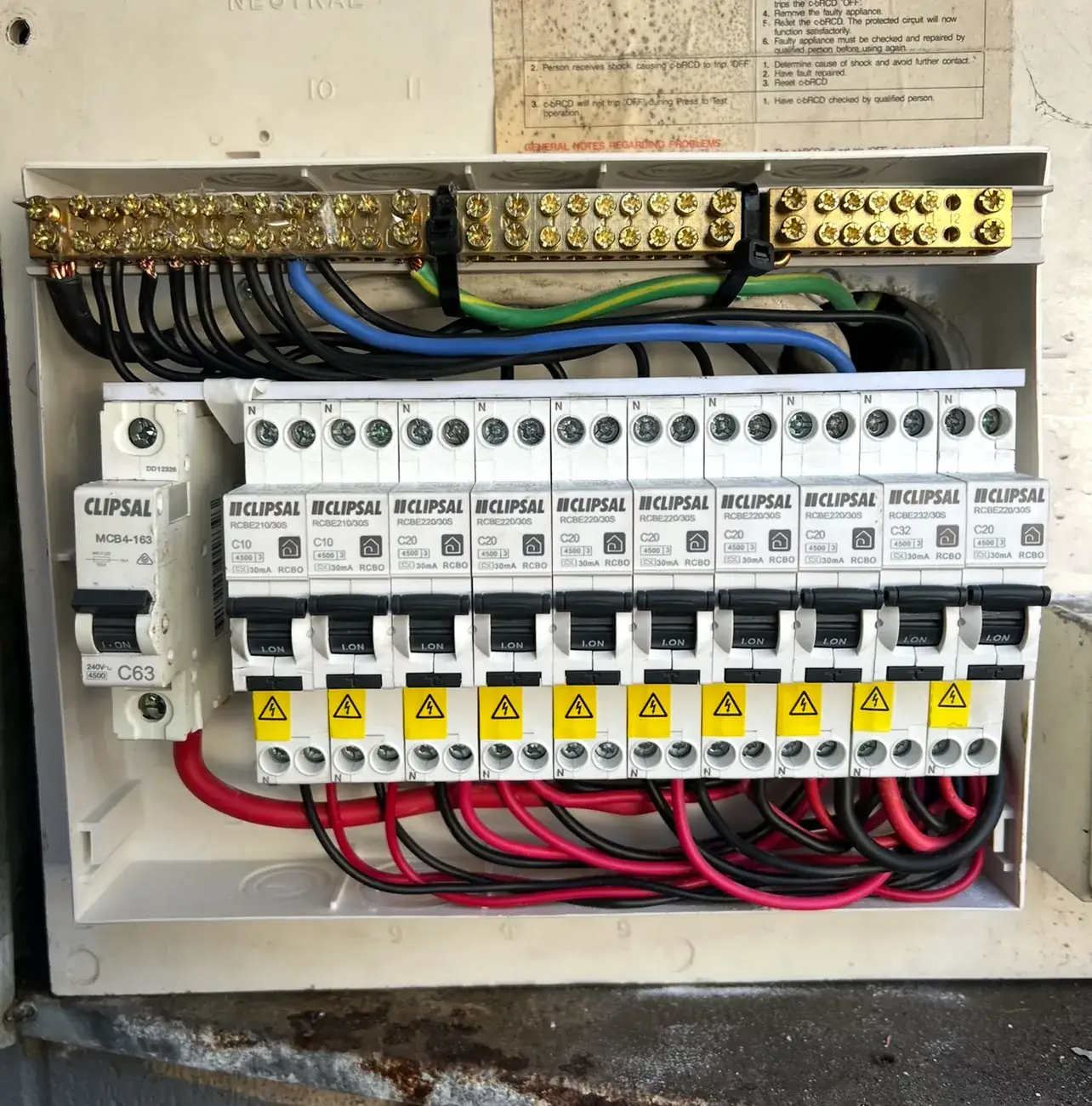
RCBO on every circuit

Individual safety switch + breaker on every final subcircuit — not just power points.

Tested under load

Every RCD trip-tested and recorded, not just visually inspected.

CCEW issued

Certificate of Compliance Electrical Work handed over on completion.

SECTION 01

Do I need a smoke alarm in every room in NSW?

NSW law does not require a smoke alarm in every room — but it does require one on every storey, in every hallway serving bedrooms, and between the sleeping and living areas of the home where no hallway exists. The legal source is the Environmental Planning and Assessment Regulation 2000 combined with Part 3.7.5 of the National Construction Code (BCA).

New builds, substantial renovations and rental properties must use 240V mains-powered photoelectric alarms with a 9V or lithium battery backup, interconnected so that when one alarm sounds, all alarms sound. Ionisation alarms are no longer recommended for residential use in Australia — photoelectric detects smouldering fires (the type that kills most people in their sleep) far faster.

For rental properties, NSW landlord obligations require alarms to be checked and cleaned annually, batteries replaced at least once a year, and the alarm itself replaced every 10 years. If you're a landlord, tenant or new owner and you're not sure whether the alarms in the home meet the current rules, book a compliance check.

SECTION 02

What's involved in a safety switch installation

A safety switch (RCD) monitors the difference between the active and neutral currents on a circuit. If a fault sends current down an unintended path — through a person, a wet wall or a damaged appliance — the RCD disconnects the circuit in under 30 milliseconds, which is fast enough to prevent electrocution in most cases.

For a modern Sydney home with a reasonable switchboard, installation involves isolating the mains, removing existing circuit breakers, fitting RCBOs (combined RCD and breaker on every circuit), testing each circuit under load, and issuing a Certificate of Compliance Electrical Work. Most single-phase homes are completed in half a day with power off for two to three hours.

Older homes with ceramic-fuse boards, asbestos backing, or no spare DIN rail generally need a full switchboard upgrade rather than a partial RCD retrofit — the enclosure simply won't accept modern devices. Rather than publish prices that may not apply to your board, we come out, look at the board and give you a fixed written quote up front. Get a free fixed-price quote before any work starts.

SECTION 03

What does an NSW electrical safety check include?

A proper residential electrical safety inspection is more than a walk-through. Expect the electrician to test the switchboard (main switch, every RCD trip-tested with a calibrated tester, polarity and earth continuity), visually inspect accessible wiring for damage or unsafe joins, test every accessible socket and switch, check the earth stake and MEN link, and verify hot-water, oven and air-conditioning circuits are correctly protected.

Smoke alarms are checked for correct type (photoelectric), location, expiry date (printed on the base), interconnection and battery backup. Any alarm past its 10-year date is replaced.

You should receive a written report listing any non-compliances against AS/NZS 3000, the priority of each item, and a fixed price to bring the installation up to standard. NSW landlords should have this done at the start of every tenancy; owner-occupiers should have it done every 5 years or after any major renovation.

FAQs

Do I need a smoke alarm in every room in NSW?

Not in every room. NSW law (Environmental Planning and Assessment Regulation 2000 and BCA 3.7.5) requires at least one working smoke alarm on every storey of a residential building, in every hallway serving bedrooms, and — where there is no hallway — between bedrooms and the rest of the home. New builds, major renovations and rental properties must use 240V mains-powered photoelectric alarms with a battery backup, interconnected across the dwelling. Landlords are also required to check and maintain alarms annually.

What is a safety switch (RCD) and is it legally required in NSW?

A safety switch (residual current device) cuts power in under 30 milliseconds when it detects electricity leaking to earth — typically through a person. Under AS/NZS 3000, RCD protection is mandatory on all new final subcircuits, and on any circuit that is altered or added to. Older Sydney homes with a switchboard that has no RCDs are not automatically illegal, but any renovation, appliance changeover, or added circuit triggers the requirement.

What's involved in a safety switch installation in Sydney?

For most homes the electrician isolates power, retrofits RCBOs (combined RCD + circuit breaker) into the existing switchboard, tests every circuit under load, and issues a Certificate of Compliance Electrical Work (CCEW). Older ceramic-fuse boards usually need a full switchboard upgrade instead of a partial retrofit — the enclosure simply doesn't have the space or DIN rail to accept modern devices.

How much does a safety switch installation cost?

Cost depends on the switchboard type, how many circuits need RCBOs, and whether the board itself needs replacing. Rather than quote a range that may not apply to your home, we prefer to inspect the board and give a fixed written quote up front — free, and with no obligation.

What does an NSW electrical safety check include?

A standard residential safety inspection covers: switchboard condition and RCD testing, visual inspection of accessible wiring, socket and switch testing, earth continuity and polarity tests, smoke alarm operation and expiry check, hot-water and oven circuit checks, and a written report noting any non-compliances against AS/NZS 3000. Landlords in NSW should have this done at the start of every tenancy and annually thereafter.

Related

24/7 Emergency Response

Real Sydney electricians on stand-by - day, night, weekends and public holidays.

Call Now
24/7 Emergency Response

Fully Licensed & Insured

NSW licensed electrical contractor with full public liability insurance.

Request Help
Fully Licensed & Insured

Upfront, Honest Pricing

Clear recommendations and pricing provided before any repair work proceeds.

Get a Callback
Upfront, Honest Pricing

Lifetime Workmanship Warranty

If our workmanship ever fails, we come back and fix it. Free.

View warranty details
Lifetime Workmanship Warranty

VOLTEX SPECIALIST

25-year RCBO, GPO & switch warranty

Plus 7-year replacement on Voltex internal & external lighting.

Empire Electrical Contractors Sydney team

Our Mission

At Empire Electrical Contractors, we're committed to being Sydney's most trusted emergency electrician - whatever the time, whatever the fault.

Our licensed team is equipped with the knowledge, tools and stocked vans to handle any emergency electrical job - from a tripping safety switch at 3am to a burnt switchboard that needs replacing today.

Call us 24/7 to speak with a real Sydney electrician. Clear recommendations and pricing provided before any repair work proceeds.